
Energy scams are becoming more frequent and more sophisticated across the U.S. Fraudsters often impersonate utility companies or energy suppliers, using pressure tactics to extract payments, collect sensitive information, or push customers into unwanted contracts. Businesses should take steps now to protect their bottom line.
Energy scammers are increasingly targeting businesses
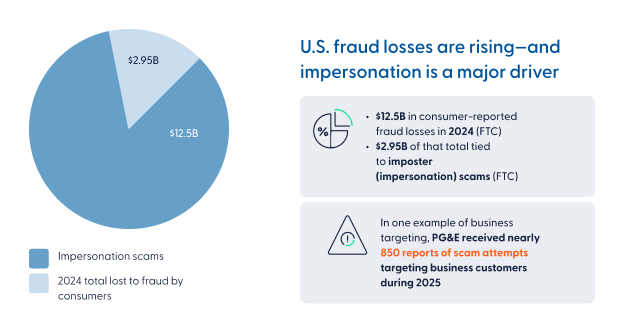
More than 60% of businesses reported being targeted by scammers, according to a report released by the Better Business Bureau in June 2025. While any industry can be a target, the energy sector is experiencing a rise in fraudulent energy scams. One utility company reported it received nearly 850 reports of scam attempts targeting business customers during 2025.
These scams tend to spike when people feel most exposed: during periods of high energy costs, contract renewal cycles, and natural disasters that disrupt normal utility operations. Just this winter, the FTC issued a scam alert following a winter storm that impacted a large portion of the country.
Utility fraud scams are also increasing in deregulated states where businesses and consumers can shop for third-party energy suppliers. The market structure in these states creates more touchpoints, more complexity, and more room for confusion—all of which scammers exploit. They also exploit energy assistance programs, claiming to have grants, new programs, or awards that promise reduced costs but result in financial loss, identity theft, or worse.
What are the most common energy scams in the U.S.?
While tactics vary, most “energy scam” and “utility fraud scam” scenarios fall into a few patterns. Understanding how they work is the first step to preventing them.
Slamming (unauthorized supplier switching)
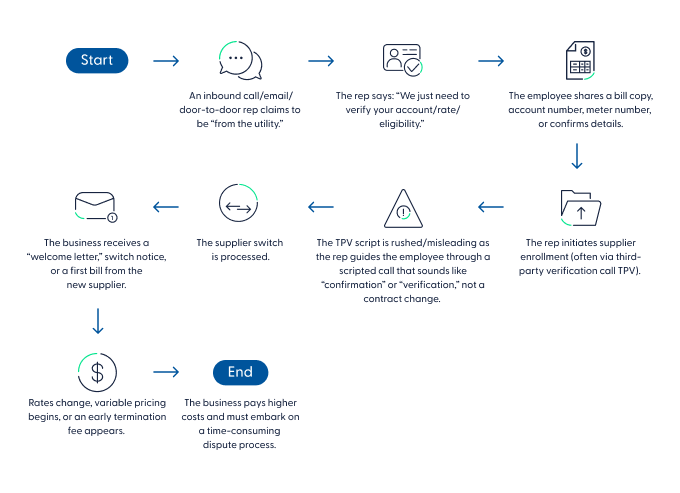
Slamming is one of the most common types of scams, referring to the unauthorized switch of an account from one service (utility or contracted service) to a new contract with another supplier. Slamming occurs when an individual obtains unauthorized access to a customer’s contact and utility account information, then uses it to enroll the service location in a supplier contract without the customer's knowledge or consent. Account information may be collected through:
- a phone call that leads to “voice authorization”
- an email or text with a link that captures an electronic signature
- an “account verification” request that seems routine but is used to initiate a switch
Impersonation (utility or supplier)
Scammers may pretend to be your utility or energy supplier—by phone, email, text, or even in person. The goal is often to:
- pressure immediate payment (“shutoff in 30 minutes”)
- collect personal identifiers or account details
- redirect payments to a fraudulent channel
Impersonators who visit in person may suggest they are there to repair or inspect your meter or other utility-related equipment.
Phishing emails and robocalls
Fraudsters use sophisticated tactics, including AI voice cloning and caller ID spoofing, lookalike email domains, or cloned payment pages to appear legitimate.
Messages often claim:
- The business's electricity or gas bill is overdue and must be paid immediately.
- The account qualifies for a discount or is due a refund for “overpayment.”
- This is a “final notice” that requires a link click to avoid disconnection.
Energy broker scams and energy contract fraud
Not all risk comes from overt impersonation. Some scams present as “legitimate” contract opportunities but rely on deception, especially in deregulated markets.
Examples include:
- misrepresenting the total energy rate (including pass-throughs)
- claiming components are fixed when they are variable
- extending the term length beyond what was described
- using aggressive tactics to bypass internal review
How energy slamming happens
Slamming typically follows a predictable path:
How to protect your account against energy scams
Most prevention comes down to governance: knowing who can authorize changes, how bills are reviewed, and how vendors are verified.
- Pay attention to your bills.
Review supply charges, supplier names, and rate structures regularly, especially after renewals, relocations, or organizational changes.
- Don’t ignore utility notices.
In many cases, a supplier-switch notice is the first line of defense. Escalate anything that references a new supplier, an enrollment, or a pending change.
- Verify any callers or requests.
If someone calls claiming to represent your utility or supplier, end the interaction and call back using a known number from your bill or official website. The FTC recommends verifying independently and not trusting payment links sent by the caller.
Know your suppliers.
Maintain a simple record of:- your current supplier(s)
- contract end dates and renewal windows
- authorized contacts and approval chain
This is especially important in deregulated states where supply and delivery responsibilities can be easily conflated.
Make sure your colleagues are aware.
Scammers often target the first available person (front desk, facilities, AP, site managers), especially for multi-site organizations.Share a short internal script: “We do not authorize supplier changes or payments by phone. Please email details to our energy/procurement contact. We will verify using official channels.”
- Seek trusted expertise.
In complex markets, it can help to work with a reputable partner to navigate contract structures, supplier relationships, and renewal timing so decisions are made deliberately, not under pressure.
What to do if you suspect a scam
Anyone can be targeted. Residential customers are often more exposed because they may be less familiar with deregulated markets, but businesses are not exempt. Some of the largest commercial energy consumers in the country have been victims of energy scams. As a business owner, it’s crucial to recognize the signs of energy scams and know how to safeguard your accounts if you encounter one.
If you suspect a scam:
- Stop the interaction. Don’t click links, share details, or continue the call.
- Contact the utility company, using verified information. Use the number on your bill or the utility’s official website—not the number provided by the caller.
- Contact your supplier. Confirm whether any enrollment, TPV, renewal, or rate change is pending.
- Document what happened. Save email headers, screenshots, phone numbers, and payment instructions.
- Report it. The Public Utility Commission (PUC) encourages reporting fraud at ReportFraud.ftc.gov.
- Contact World Kinect, if you work with us or want an independent review. If you’re unsure whether a contract offer, supplier change, or outreach is legitimate, escalate it for verification before taking any action.
Trust and transparency with World Kinect
Navigating the energy market can be daunting for businesses, and we understand the challenges of figuring out who to trust, how to switch, and what energy prices may be in the future. However, you can rely on World Kinect to assist you with any changes you may need to your energy contract.
Our local contacts and expertise can help your business source energy, achieve your decarbonization goals, and make informed decisions about your energy needs, minimizing risk. Get in touch with our team if you need support or have any concerns.
Request a call today, or book a free session with one of our experts.