
Understanding how the UK energy market operates, from energy procurement to billing, is a crucial part of managing your energy costs, managing risk, and setting efficiency objectives for your business. Our team of experts are well versed in guiding businesses through the complexities of the energy market, by advising and supporting decision making at every step.
Read our latest expert knowledge and insights into how the UK energy market operates, how the market has changed over the years, and how this knowledge can affect your business.
Five core components
The UK energy market can be split into five key components, with each one serving essential functions:
- Suppliers: These are the companies that supply and sell electricity and gas. Suppliers are the direct link to the energy market, not only supplying their customers' energy needs but also communicating key updates and providing customer support.
- Distributors and Transporters: These companies are responsible for delivering energy to end users, managing infrastructure, including pipes, wires, cables, and meters, and ensuring the safe and reliable flow of gas and electricity. Their costs are passed on to customers through the supplier’s charges in your energy bill.
- Transmission (Electricity): The transmission network is responsible for transporting high-voltage electricity from generators to distributors. This system serves as the backbone of the UK’s electricity grid, ensuring that power is efficiently transferred over long distances. Transmission operators play a critical role in maintaining grid stability and reliability.
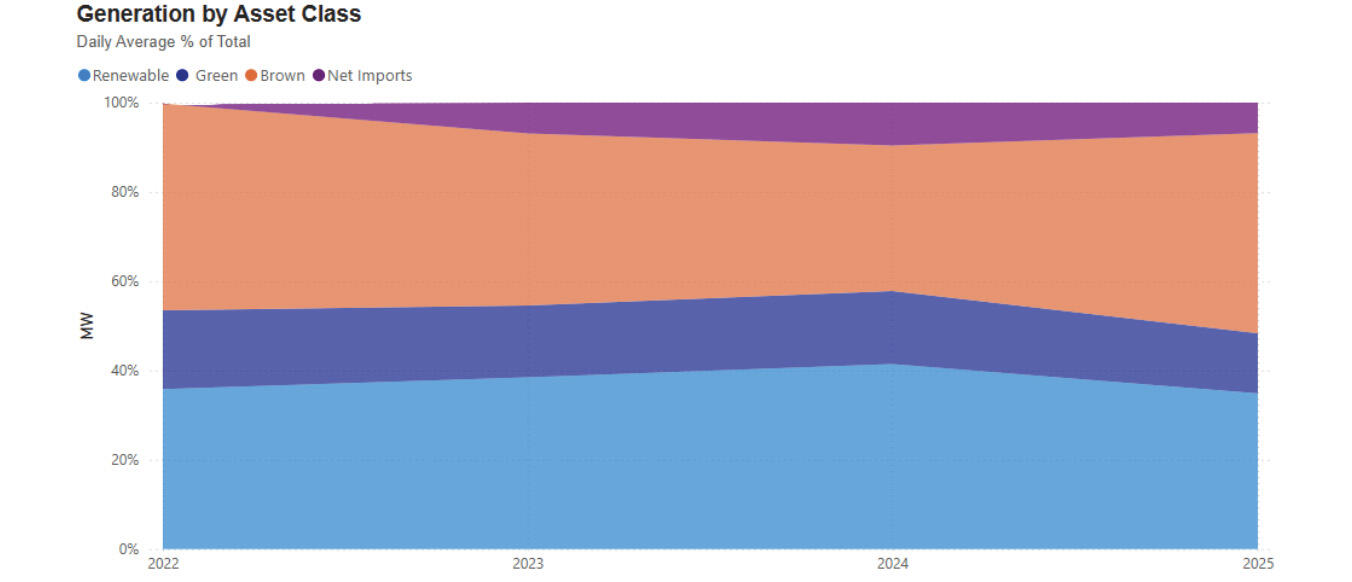
- Producers and Generators: These entities source and generate the energy that powers homes and businesses. For electricity, this includes power stations, wind farms, and solar arrays, while for gas, it involves exploration, extraction, and production processes. As the energy mix evolves, more energy is being derived from gas, nuclear, and renewable sources. Some energy suppliers also act as producers or generators, integrating these roles to better manage supply and demand.
- Speculators: These are companies that build up long and/or short positions on the whole price with the objective of creating value. Speculative trading has grown significantly over the last 5 to 10 years, with more market participants needing to create speculative value to increase return on investments like PPAs.
The UK energy market has gone through a significant transformation since the 1990s, when it was deregulated, giving businesses and domestic consumers the flexibility to change energy providers.
Deregulation of energy in the UK provides energy users with a choice
Deregulation is the process of removing government control from specific industries – in this case, the energy sector. This process began for the energy market in the 1980s, but shifted dramatically when in 1999, liberalisation of the market gave consumers the freedom of choosing their own energy suppliers. The change took place to create more competition and drive innovation, as well as improve service. The main benefit of this to customers is the greater range of competitive options, which means more opportunities to drive down energy costs.
However, the competitive landscape has also brought challenges. The complexity of the UK energy market and the high financial costs associated with running a supply business, along with intense competition, have driven some major players out of the market. In recent years, several suppliers have gone into administration (such as Bulb Energy, Together Energy, Green and Pure Planet), highlighting the risks that come with a crowded and financially demanding industry. This underscores the need for businesses to carefully assess supplier stability as well as pricing when choosing an energy provider.
Deregulated electricity and gas markets are still evolving
An important part of understanding the energy market is recognising the differences between the gas and electricity markets, including factors you may want to consider for your business.
Electricity
Electricity in the UK is generated from a diverse energy mix, including gas, nuclear, wind, solar, and imported energy. This diversity adds resilience but also means that fluctuations in renewable sources, like wind or solar, can impact supply stability.
Electricity generally costs more than gas, mainly because its price is based on the cost of producing the last bit of power needed to meet demand, and electricity prices in the wholesale market can change every 30 minutes, depending on supply and demand.
Wholesale electricity prices are highly dynamic and can change second by second, with tradable contracts available from seasons ahead down to intraday 30-minute segments on the day of delivery, reflecting fluctuations in supply and demand.
In the UK, electricity is often generated by gas-powered plants, which tend to have higher costs. Additional expenses also arise from converting and distributing electricity across the grid to reach businesses and homes.
Because most businesses rely on electricity for essential operational functions like lighting, heating, and equipment, electricity costs can make a big impact on their budgets. On top of that, electricity is subject to extra carbon taxes and government charges, such as the Climate Change Levy (CCL), which increases its overall price, although businesses using less than 33 kWh per day on average (de minimis) are exempt. VAT is typically 20%, but certain businesses may qualify for a 5% rate, including those with de minimis usage.
The UK’s electricity market is in a period of transition, with ongoing investments in renewable energy and smart grid technologies. Government goals include achieving a 100% clean electricity grid by 2035, and driving increased focus on sustainable energy options for businesses.
Key terms to know about the electricity market include:
- Peak demand: High-demand periods when electricity prices are higher due to increased consumption.
- Smart meter: A meter that provides real-time energy consumption data, useful for cost control.
- Renewable generation: Electricity produced from sources like wind, hydro and solar, which can reduce a business’s carbon footprint.
Gas
The UK gas market can be costly for businesses due to the high expense of sourcing gas, but competition among suppliers helps keep services competitive. Seasonal demand means costs are highest in winter, and wholesale gas prices are highly variable year-round, thanks to global demand and political events. Monitoring these factors can help businesses predict price changes and plan their energy usage effectively, and fixed-rate contracts can help businesses avoid sudden price increases by locking in rates.
Gas bills also include the Climate Change Levy (CCL), a tax on non-renewable energy, although businesses using less than 145 kWh per day on average (de minimis) are exempt. VAT is usually 20%, but small users or businesses with certain domestic components may qualify for a reduced 5% rate, including those with de minimis usage.
The UK government is committed to reducing reliance on non-renewable gas sources, with a shift toward renewables and investments in energy-efficient technologies. Future plans include developing hydrogen gas options to help decarbonise the gas grid, and creating new opportunities for businesses to explore sustainable options.
Key Terms:
- Wholesale price: The price at which two counterparties transfer the title of a commodity. This does not include things like brokerage fees, cost of carry, or credit provisions, which could be added before selling to businesses.
- Fixed-rate contract: A contract where the price per kWh remains constant for a specified period.
- Climate Change Levy (CCL): A tax on non-renewable gas and electricity consumption aimed at promoting efficiency.
What services do business energy brokers provide?
Consulting an energy broker like World Kinect means the complexities of managing your energy procurement and costs are taken out of your hands. Consulting the services of an energy procurement expert means you will have a reliable partner that takes on board researching and gathering market quotes, overseeing the process of switching to a new provider, managing contract terms during renewal periods to get you the best deals possible, and general expert advice on energy use whenever you need it.
You can contact World Kinect today for expert advice and assistance.